Through Mine Own Eyes, part 3

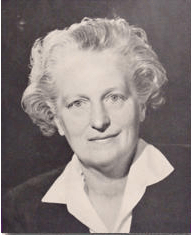
Concluding installment from Katharine Trevelyan’s remarkable experience in the garden at Coombe.  Previous installments tell more about Ms. Trevelyan. 

annie-spratt-372221-unsplash

Every prayer was fulfilled, every possible desire for the whole world consummated; for His Kingdom had come and I had beheld it with my very eyes. Never again the need to meditate for He was here, to be stood in, sat in, as a child might play on the edges of a great sunny river. And, indeed, I found myself only a child, playing in Him, laughing with Him at the way He was visiting His world. When I stood within Him, He gave and was everything. The years to come, which He showed me as easily as a father shows his child a curious shell beside the great river, held in them no surprise; only wonder and joy.


Through Mine Own Eyes, Part 2

Continuing Katharine Trevelyan’s experience in the garden at Coombe from her “autobiography of a natural mystic.” The book was originally published as A Fool in Love in 1962. Trevelyan came from a prominent British family. Her uncle was the noted historian George Macaulay Trevelyan. She dabbled in anthroposophy (a belief system C. S. Lewis was well acquainted with because of his life-long friendship and debate with Owen Barfield). Before the 1958 experiences recounted in these installments, Trevelyan had joined the Church of Christ but had become disenchanted with its divisions.  This is the second of three installments. 

Screen Shot 2018-04-23 at 12.43.55 PM

Every flower spoke to me, every spider wove a miracle of intricacy for my eyes, every bird understood that here was heaven come to earth. Turner must have been seeing the skies as I saw them then—living cloud shapes crossing and recrossing each other as though conversing inform or singing in color.

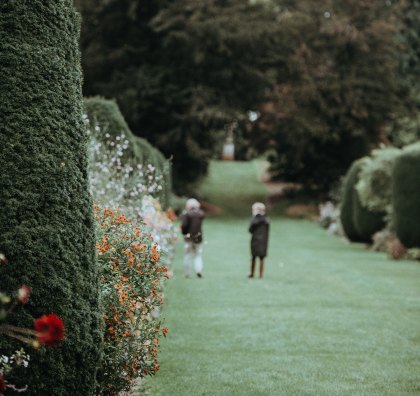
But there was something more wonderful than the Light within the light – more wonderful than the standstill of time. It was that God walked with me in the garden as He did before the Fall. Whether I sat, whether I walked, He was there – radiant, burningly pure, holy beyond holy.

When I breathed, I breathed Him; when I asked a question, He both asked and answered it.

My heart was unshuttered to Him, and He came and went at will; my head had no limit or boundary of skull, but the Spirit of God played on me as though my mind were a harp which reached the zenith.

sora-sagano-449514-unsplashPhoto by Sora Sagano on Unsplash

Joy

brooke-cagle-39567-unsplash

We begin with C. S. Lewis for several reasons. His influence as a writer has been as great as anyone who wrote of a mystical experience in recent times. He bridges the ancient and modern worlds, and he bridges the wildest Romanticism with the most prosaic Church of England. Today he is still considered one of the greatest experts in medieval and Renaissance literature.  He could be a rigid logician and he always bested his opponents (with perhaps one exception) during public debates at Oxford, but his life’s course was set by a childhood experience beyond all reason.

This example of a mystical experience is not unique in its occurrence during childhood, but it is nearly unique in how articulate the author is able to describe it some 45 years after the fact.  But then, as he says later, “in a sense the central story of my life is about nothing else.” 

…..The thing has been much better done by Traherne and Wordsworth, but every man must tell his own tale.

The first is itself the memory of a memory. As I stood beside a flowering currant bush on a summer day there suddenly arose in me without warning, and as if from a depth not fo years but of centuries, the memory of that earlier morning at the Old House when my brother had brought me his toy garden into the nursery. It is difficult to find words strong enough for the sensation which came over me; Milton’s “enormous bliss”of Eden (giving the full, ancient meaning to “enormous”) comes somewhere near it.  It was a sensation, of course, of desire; but desire for what? not, certainly, for a biscuit tin filled with moss, nor even (though that came into it) for my own past. [“Oh, I desire too much.”] –and before I knew what I desired, the desire itself was gone, the whole glimpse withdrawn, the world turned commonplace again, or only stirred by a longing for the longing that had just ceased. It had taken only a moment of time; and in a certain sense everything else that had ever happened to me was insignificant in comparison.

–C. S. Lewis, Surprised by Joy. New York: Harcourt, Brace & C0., 1955. @ C. S. Lewis Pte. Ltd.

annie-spratt-188833-unsplash

The Inspiration Begins

This is a place for inspiration–bold, naked, and unashamed.  Thanks for joining me!  In some lives at some times God has broken through. Your heart is pierced. Your mind is lifted to unforeseen heights.  For those weighed down with baggage about the word “God,” then we can say someone or some things from a higher dimension have entered our third.  Miraculous intervention, divine love, profundity made visible: All these have somehow been experienced on our planet by people of all races.

I hope to upload a new item daily, but my schedule and the length of some passages may intervene.  You are welcome to submit your own, from your own experience or others’.

All these accounts are true, or at least alleged to be true by their authors.  I do not write them.  I copy and paste them. This is a service.

Most of these accounts are joyful. But some are terrifying. For God is holy, absolute and infinite goodness, and we are not.  Since “inspire” originally meant “infused with Spirit,” and if the Spirit can motivate us to abandon the worst part of ourselves, then these readings are inspiring too.  One thing you will find here is what the word “awesome” originally meant.

The site will eventually include wisdom about the nature of these experiences; I have a master’s degree in spiritual theology from a major, accredited Canadian institution of higher learning. Don’t make me string cliches like that together again or I will find you.  But seriously, guidance can be useful. The wisest guidance of all is that we do not seek these experiences for themselves. That makes for a destiny of disappointment.  We seek the One who makes them, who gives us a glimpse of reality more real than the everydayness we must live in here.

The experiences are like telescopes in this way.  We use them to see beyond. We are not going to learn about the stars by admiring, collecting, and stroking the brass of the telescopes.  And to keep perspective on the moral importance of mystical experience we might apply the mysticism of the poet William Blake:

God appears, and God is light
To those poor souls who dwell in night
But does a human form display
To those who dwell in realms of day.

So: Many things on our journey are more important than ecstasy and mystical experience:  Seeing the image of God in your neighbor, loving her or him as yourself.  Just keeping faith when you have to slog through another day of what seems like winter with no Christmas or a desert sans oases.  But sometimes we need a cup of hot chocolate or a cool cup of water to keep on going.  Sometimes we need what medieval writers called consolations.  If we cannot have it ourselves at least we can be glad that others have, and we can be reminded that we live in a world of possibilities not impossibilities.  Ask your nearest quantum mechanic.

That’s enough spiritual theology.  For now, enjoy.

Mystical experiences are rare things, but we will begin with one of the most widely read, from a man who–many years later– had as large a spiritual impact on our modern age as any writer.

Good company in a journey makes the way seem shorter. — Izaak Walton

post