Across the Chasm–Underwater

Featured
Photo by Alex Rose on Unsplash

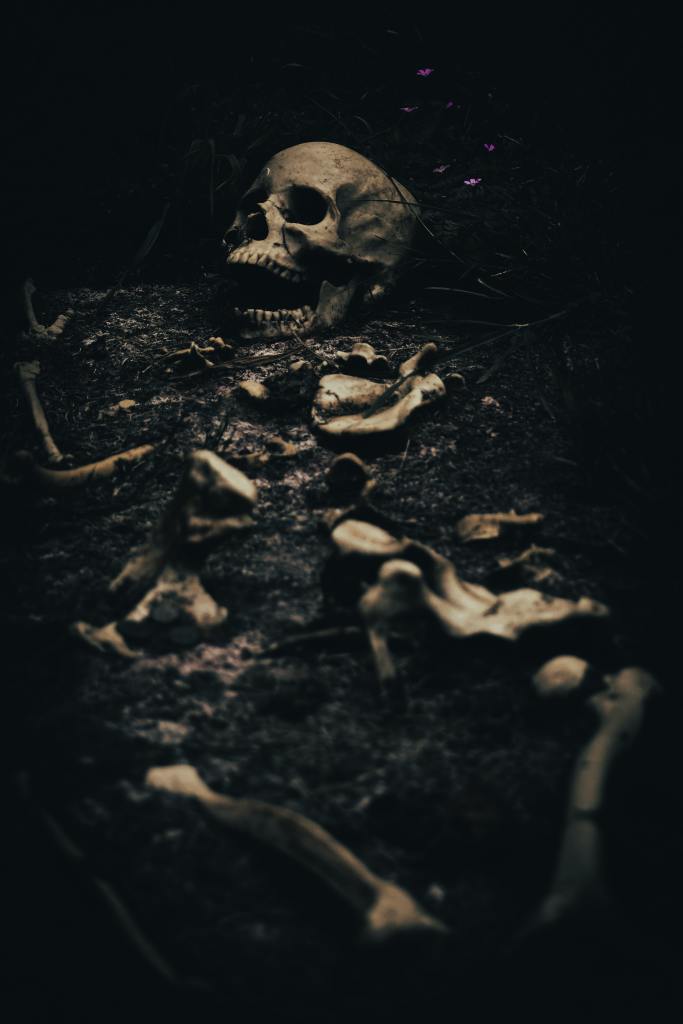
I thought the previous installment from C. S. Lewis’s The Pilgrim’s Regress would be the last from that book, but now I’ve decided to not leave the book on such a stark and ugly note. Or such ugly pics, for that matter.

In that post, John faced Death–literally. Death told him that death to self is inevitable: He can go willingly or he can struggle. He chooses to go willingly.

He finds himself on the floor of the canyon. A small crowd of people are standing around a figure sitting on a throne: Mother Kirk (the mother church). A large pool stretches between them and the opposite wall of the canyon. His old companion Vertue is there too, sitting on the ground completely naked. John’s long quest has reached its climax.

Mother Kirk tells them that the only way to the other side is to become naked like Vertue and dive into the water headfirst. Then they must swim downwards to a tunnel in the wall that leads up and onto the opposite side. John thinks to himself, “I see they have brought me here to kill me.”

As he hesitates on the brink, he is visited by wraiths of all the men representing worldviews he met heretofore, such as Old Enlightenment, Sensible, and Humanist, who all try to tempt him away from believing in the necessity or even the reality of what he is about to do (baptism and rebirth). But Vertue interrupts his ruminations: “Come on, John…the longer we look at it the less we shall like it,” and he dives into the water. John soon follows.

From The Pilgrim’s Regress by C. S. Lewis, Book 9, Chapter V: Across the Canyon

My dream grew darker so that I have a sense, but little clear memory of the things that John experienced both in the pool and in great catacombs, paved sometimes with water, sometimes with stone, and upon winding stairways in the live rocks whereby he and Vertue ascended through the inwards of the mountain to the land beyond Peccatum Adae.* He learned many mysteries in the earth and passed through many elements, dying many deaths….

Of all the people he had met in his journey only Wisdom appeared to him in the caverns, and troubled him by saying that no man could really come where he had come. All his adventures were but figurative, for no professed experience of these places could be anything other than mythology. But then another voice spoke to him from behind him, saying:

“Child, if you will, it is mythology. It is but truth, not fact: an image, not the very real. But then it is My mythology. The words of Wisdom** are also myth and metaphor: but since they do not know themselves for what they are, in them the hidden myth is master, where it should be servant: and it is but of man’s inventing.

“But this is My inventing, this is the veil under which I have chosen to appear even from the first until now. For this end I made your senses and for this end your imagination, that you might see My face and live.

“What would you have? Have you not heard among the Pagans the story of Semele? Or was there any age in any land when men did not know that corn and wine were the blood and body of a dying and yet living God?”

Photo by geoff trodd on Unsplash

Afterword

This passage is unique in the book for it is the only time God Himself speaks. The voice seeks to set John’s heart at ease and counter what Wisdom said about the relation of truth and myth.

In this, his first book that was not poetry and his first apologetic, Lewis certainly had in mind the theories of The Golden Bough by Sir James George Frazer, an enormously influential series of books first published in 1890. It argued that myths of a god whose death and resurrection enabled the crops to grow–or were the crops growing–were nearly universal across cultures, and the story of Jesus was merely one of these.

What John is experiencing as he dives and goes underwater is of course baptism: death to the old self, the rising of the new. Wisdom has said this could only be metaphorical, not a real experience. But God counters that use of the word “only” and explains that it is both mythical and real, it is His means by which finite, sinful people will be able to live with a holy God, “that you might see My face and live.”

Lewis and Literary Theory

Lewis responds to Frazer’s anthropology by applying knowledge from his own areas of expertise: literary and linguistic theory and clarifying the relationship between myth, fact and revelation. “It is but truth, not fact” is a concept seeded into Lewis by his friend, J.R.R. Tolkien, during the famous chat they had on Oxford grounds which led to Lewis’s conversion. The seed Tolkien planted bloomed also into an essay Lewis later wrote, “Myth Became Fact.” It provides a distinction between myth and legend, myth and truth, myth and factuality. It describes myth in a way that no other literary analyst, as far as I know, had done. Lewis says myths are not merely legends, much less allegories, or even untrue. He says that myths allow us to experience, to “taste,” an archetypal truth that gives rise to many truths.

Photo by NEOM on Unsplash

Lewis and Tolkien (and G.K. Chesterton as well) believed that God prepared the way for Jesus Christ through the Jews by law and prophecy and through the pagans by imagination. Stories of a dying but living god seized the pagan sensibility. There are myths that humans invent and then there is the one that God invented: All life does come only from plants that die in winter only to rise again. All plants really do provide a seed that dies yet creates a much bigger life.

Jesus himself seems to acknowledge these pagan ideas when he answers the request from the Greeks in John 12:20-25: Predicting his own death, he continues, “Very truly I tell you, unless a kernel of wheat falls to the ground and dies, it remains only a single seed. But if it dies, it produces many seeds.”

The voice of God here says that Wisdom’s words also consist of “myth and metaphor” but Wisdom is unaware that they do. This idea that literal language was not distinctly different or free from figurative language was first advanced by Giambattista Vico (1668–1744) and radicalized by Friedrich Nietzsche (1844–1900). But no modern literary theorists advanced it until I.A. Richards in 1936. It became a central tenet to the deconstruction theories of Jacque Derrida and Paul deMan much later in the 20th century. That Lewis was arguing it in 1933 shows he was ahead of his time.

Whither Mysticism?

What has all this to do with mystical wonder? This passage illustrates an intellectual dimension of mystical wonder. It portrays the astounding way God reaches us through all we experience as meaning. The One revealed as The Word is the essence of meaningfulness. When we want to open a door to a transcendent dimension we use myth and metaphor. When God wants to, He uses human lives.

*Latin: the sin of Adam
Featured

The Face We Least Want to See

This is our last installment from C. S. Lewis’s allegory, The Pilgrim’s Regress. After speaking and lodging in a cave with a hermit named History, John has come to understand that there is no other way to his beloved, heavenly Island except via Mother Kirk–the church. That night, during a thunderstorm, he sneaks out of History’s cave and seeks to abandon his entire enterprise and reverse course. I mean, who wants to go back to the church of their childhood, right? But along this dangerous canyon path he soon comes face to face again with Reason, portrayed as a female knight clad in armor with a long sword. Knowing he cannot combat her and win, he reverses himself again.

From The Pilgrim’s Regress by C. S. Lewis, Book 9, Chapter III

…It was no longer a question of plans or of ultimate escape. The hunted animal’s impulse to prolong the chase kept him ragingly on the move. The [lightning] flashes were growing rarer and a star or two showed ahead. Then all of a sudden a wind shook the last raindrops fiercely in his face and there was moonlight all about him. But he drew back with a groan.

Within an inch of him he had seen a face. Now a cloud crossed the moon and the face was no longer visible, but he knew that it was still looking at him–an aged, appalling face, crumbling and chaotic, larger than human. Presently its voice began:

“Do you still think it is the black hole* you fear? Do you not know even now the deeper fear whereof the black hole is but the veil? Do you not know know why they would all persuade you that there is nothing beyond the brook** and that when a man’s lease is out his story is done?

“Because, if this were true, they could in their reckoning make me equal to nought, therefore not dreadful: could say that where I am they are not, that while they are, I am not. They have prophesied soft things to you.

“I am no negation, and the deepest of your heart acknowledges it. Else why have you buried the memory of your uncle’s face*** so carefully that it has needed all these things to bring it up? Do not think that you can escape me; do not think you can call me Nothing.

“To you I am not Nothing; I am the being blindfolded, the losing all power of self-defense, the surrender, not because any terms are offered, but because resistance is gone: the step into the dark: the defeat of all precautions: utter helplessness turned out to utter risk: the final loss of liberty. The Landlord’s Son**** who feared nothing, feared me.”

“What am I to do?” said John.

“Which you choose,” said the voice, “Jump, or be thrown. Shut your eyes or have them bandaged by force. Give in or struggle.”

“I would sooner do the first, if I could.”

“Then I am your servant and no more your master. The cure of death is dying. He who lays down his liberty in that act receives it back. Go down to Mother Kirk.”

————-

*Hell

**The division between life and afterlife

***As a child, John had seen his dead uncle being prepared for burial and was especially scared of the corpse’s face.

****The Son of God

*********

Afterword

Whose face is this? And what could such a nightmarish encounter have to do with the subject of this supposedly inspiring blog, Mystical Wonder?

It’s clear to me that there is only one answer to the first question. This is the face of Death, appallingly ugly, “crumbling and chaotic.” Can you imagine what it would be like to see the face of one of your loved ones two weeks after he or she died? There is one thing so horrible that every single culture on earth, in their native wisdoms, ensure their people do not see.

Some readers have surmised the face is the devil’s. But the face says, “The Landlord’s Son who feared nothing, feared me.” This is not the face of the devil, for the Son of God demonstrated quite clearly he didn’t fear him. But in the garden of Gethsemane, the night before his crucifixion, the Son of God sweat drops of blood, asking God to take “this cup” away. “My soul is overwhelmed with sorrow to the point of death” (Mark 14:34).

Why did I put this passage here, among Mystical Wonders? Because one does not get very far on the path of Christian spirituality without confronting death: the old self must die to make way for the new self, which lives forever. But when death to self becomes real and not just an ideal that we concede the truth of, it is incomparably awful, the one thing we want to avoid at all costs. It is like shivering, shrinking, and being punched in the stomach at the same. No, it’s worse. I’ve had a lot of it in the past year. And it is a step into the unknown and we cannot see where our outstretched foot might land, if anywhere. We are in Someone Else’s hands now.

Frankly, I don’t think anyone ever does this, chooses to die before they die, until they have to. But another reason I included it is that Lewis’s power to describe the indescribable is so great, his insight about our feelings regarding Death so revealing, that the passage is somewhat a mystical experience in and of itself. “Utter risk turned out to utter helplessness.” Is not that what is in the back of our minds when we really contemplate dying?


“Universal Spirit” or the dreaded “Landlord”?

Featured

Continuing with C. S. Lewis’s allegory The Pilgrim’s Regress, we find John continuing his hopelessly difficult struggle down and up a treacherous, dry canyon in pursuit of his heart’s desire, an Island he has glimpsed and desired throughout his life. In the allegory we can be sure that the Island is Heaven or unity with God. His companion Vertue has gone on ahead, not caring whether he or John dies. John decides the climb is too treacherous and his supplies are gone and he must go back “and live out the rest of my life as best I can.”

Then a mysterious “Man” appears coming towards him down the path. John tells him that his companion Vertue has gone insane. But the man replies that Vertue is no more insane than John, and if they do not stick together neither of them will regain sanity. The Man pulls John up and across a particularly difficult gap. The Man disappears, and John looks back and sees that trying to go back would now be impossible. But the way ahead makes his heart fail.

John has learned from Wisdom that his true identity is Universal Spirit, that in essence they are one.

From The Pilgrim’s Regress, Book 8, Chapter III

Then he tried to recall the lessons of Mr. Wisdom, whether they would give him any strength. “It is only myself,” he said. “It is myself, eternal Spirit, who drives this Me, the slave, along that ledge. I ought not to care whether he falls and breaks his neck or not. It is not he that is real, it is I–I–I. Can I remember that?”

But then he felt so different from the eternal Spirit that he could call it “I” no longer. “It is all very well for him,” said John, “but why does he give me no help? I want help. Help.”

Photo by Wil Stewart on Unsplash

Then he gazed up at the cliffs and the narrow sky, blue and remote, between them, and he thought of that universal mind and of the shining tranquility hidden somewhere behind the colors and the shapes, the pregnant silence under all the sounds, and he thought, “If one drop of all that ocean would flow into me now–if I, the mortal, could but realize that I am that, all would be well. I know there is something there. I know the sensuous curtain is not a cheat.” In the bitterness of his soul he looked up again, saying: “Help. Help. I want Help.”

But as soon as the words were out of his mouth, a new fear, far deeper than his fear of the cliffs, sprang at him from the hiding-place, close to the surface, where it had lain against this moment. As a man in a dream talks without fear to his dead friend, and only afterwards bethinks himself, “It was a ghost! I have talked with a ghost!” and wakes screaming: even so John sprang up as he saw what he had done.

“I have been praying,” he said. “It is the Landlord under a new name. It is the rules and the black hole and the slavery dressed out in a new fashion to catch me. And I am caught…”

****

(C) 1943 Clive Staples Lewis. Paragraphs added to increase readability. First photo by Blake Cheek on Unsplash.

Featured

Unbounded Sweetness

Jack began this blog so it is only fitting that we return to him nearly one year later. This passage is from the first book C. S. Lewis wrote after his conversion, The Pilgrim’s Regress. It’s a straight-up allegory, a genre Lewis never deployed again. It allegorizes Lewis’s own search for truth and for the source of the childhood event that drew him forward all his life. The story starts from his childhood’s nominal Calvinism and follows him in and out of the blind alleys, false Joys, world views illogical and hopeless, the spirit of the age (Freudianism) and finally to Mother Kirk (Church) and her Son.

C. S. Lewis

But “John” is also an Everyman. In this passage he is very young and has just received his religious instruction about “the Landlord.” This never-seen figure owns and rules the entire country and John has begun to learn the Landlord’s hopelessly difficult list of rules that everyone must follow or be severely punished.

The Pilgrim’s Regress, Book One, Chapter II, “The Island”

And now I dreamed that John went out one morning and tried to play in the road and to forget his troubles; but the rules kept coming back into his head so that he did not make much of it. However, he went on always a few yards further till suddenly he looked up and saw that he was so far away from home that he was in a part of the road he had never seen before. Then came the sound of a musical instrument, from behind it seemed, very sweet and very short, as if it were one plucking at a string or note of a bell, and after it a full, clear voice — and it sounded so high and strange that he thought it was very far away, further than a star. The voice said, Come. Then John saw that there was a stone wall beside the road in that part: but it had (what he had never seen in a garden wall before) a window. There was no glass in the window and no bars; it was just a square hole in the wall. Through it he saw a green wood full of primroses: and he remembered suddenly how he had gone into another wood to pull primroses as a child, very long ago–so long that even in the moment of remembering the memory seemed still out of reach.

While he strained to grasp it, there came to him from beyond the wood a sweetness and a pang so piercing that instantly he forgot his father’s house, and his mother, and the fear of the Landlord, and the burden of the rules. All the furniture of his mind was taken away. A moment later he found that he was sobbing, and the sun had gone in: and what it was that had happened to him he could not quite remember, nor whether it had happened in this wood, or in the other wood when he was a child. It seemed a moment, and through the rift he had seen a calm sea, and in the sea an island, where the smooth turf sloped down unbroken to the bays, and out of the thickets peeped the pale, small-breasted Oreads, wise like gods, unconscious of themselves like beasts, and tall enchanters, bearded to their feet, sat in green chairs among the forests. But even while he pictured these things he knew, with one part of his mind, that they were not like the things he had seen–nay, that what had befallen him was not seeing at all. But he was too young to heed the distinction: and too empty, now that the unbounded sweetness passed away, not to seize greedily whatever it had left behind. He had no inclination yet to go into the wood: and presently he went home, with a sad excitement upon him, repeating to himself a thousand times, “I know now what I want.” The first time that he said it he was aware that it was not entirely true: but before he went to bed he was believing it.

Afterword

What is described here allegorically is the same momentous event Lewis described in his 1951 memoir, Surprised by Joy. (Note the presence of primroses in both versions.) There he wrote of it “in a sense the central story of my life is about nothing else.”

But perhaps this account, written 18 years earlier, captured the experience more freshly. At any rate it is a different, usually ignored window on that one event that led to millions of people all over the world being blessed by Lewis’s writings.

And it’s one close to my heart. When I first read this I was a new Christian at 24, and it was only the second “Christian book” I had ever opened. After I read this passage I did not move from my seat until I had finished the book, so astonished was I that another person had the same childhood experiences that I did.

Featured

A 20th century French philosopher, a 17th-century English poem, and a mystical experience

Here is proof that poetry can take us where flat statements cannot.  This selection is twinned with the previous one, George Herbert’s poem.  You will see why.

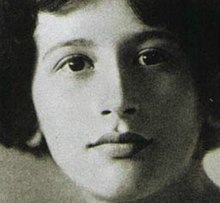
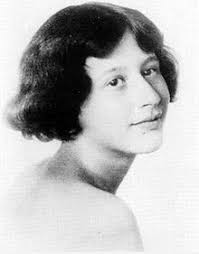
220px-Simone_Weil_1921

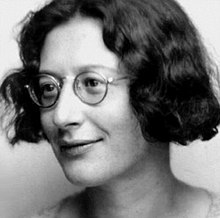
The French philosopher Simone Weil was born in 1909 and lived only until 1942. Gifted with sharp intelligence and curiosity, she obtained an advanced degree in Philosophy from the Ecole Normale Superiuere and taught at a girls’ school.  Her short life was marked by a restless search for truth and fighting for justice for the working class.  Several times she rejected the academic life to work the soil with her bare hands.  Some thought of her as “an unorthodox Marxist moving toward anarchism.”  She helped the anti-fascists in the Spanish Civil War and took part in the French resistance when the Germans invaded France.  Yet she wrestled with belief in God and pursued truth passionately, allowing no ideologies or alliances to block her.

young-simone-weil

When the Nazis occupied France Weil eventually left for the United States.  The French provisional government asked for her assistance and she moved to London.  There she wanted to share in the sufferings of those in the occupied zone, but this self-imposed lack of nutrition along with her working to the point of exhaustion led to her death. 

She published no books in her lifetime and few essays on religion.  The record of her spiritual hunger and mystical experiences only came to light when her letters were published posthumously.  She may be the most “heady” of 20th century thinkers to have a mystical experience. 

From Waiting for God by Simone Weil

There was a young English Catholic there [at Solesmes Abbey] from whom I gained my first idea of the supernatural power of the sacraments because of the truly angelic radiance with which he seemed to be clothed after going to communion. Chance—for I always prefer saying chance rather than Providence—made of him a messenger to me.  For he told me of the existence of those English poets of the seventeenth century who are named “metaphysical.”  In reading them later on, I discovered the poem…called “Love.”* I learned it by heart.  Often, at the culminating point of a violent headache, I make myself say it over, concentrating all my attention upon it and clinging with all my soul to the tenderness it enshrines.  I used to think I was merely reciting it as a beautiful poem, but without my knowing it the recitation had the virtue of a prayer.  It was during one of these recitations that, as I told you, Christ himself came down and took possession of me.

In my arguments about the insolubility of the problem of God I had never foreseen the possibility of that, of a real contact, person to person, here below, between a human being and God.  I had vaguely heard tell of things of this kind, but I had never believed in them.  In the Firetti the accounts of apparitions rather put me off if anything, like the miracles in the Gospel.  Moreover, in this sudden possession of me by Christ, neither my senses nor my imagination had any part; I only felt in the midst of my suffering the presence of a love, like that which one can read in the smile on a beloved face.

*Titled “Love III” in most editions of Herbert’s works.

The Abbey at Solesme, France
The Abbey at Solesme, France. By Bautsch – Own work, Public Domain


From Waiting for God by Simone Weil, transl. by Emma Craufield, © 1951 by G. P. Putnam, pp. 68-69.  Big thanks to poet-scholar Anna Vogt for first telling me about Weil so, so long ago.